
The Conversation That Brought Us Back
What are you afraid to say out loud?
What’s the conversation you’ve been putting off, the one that matters, but you haven’t had the courage to start?
That question surfaced quietly at the end of The Diary of a CEO, Episode 176. Steven Bartlett was interviewing Simon Sinek, and like many of Simon’s insights, it crept in gently… then stayed.
He shared a story about a friend who was deeply burned out. She had all the right support around her friends checking in, people offering good advice, time away from work but nothing seemed to help. She remained stuck. Until something shifted. She began helping someone else. No grand plan, no therapy breakthrough just one act of care and that’s when things started to change.
Why? Because, as Simon reflected, “We are both individuals and members of a group. At every moment. And somewhere along the way, we’ve stopped showing up for each other in that way."
This idea isn’t just emotional, it’s grounded in data.
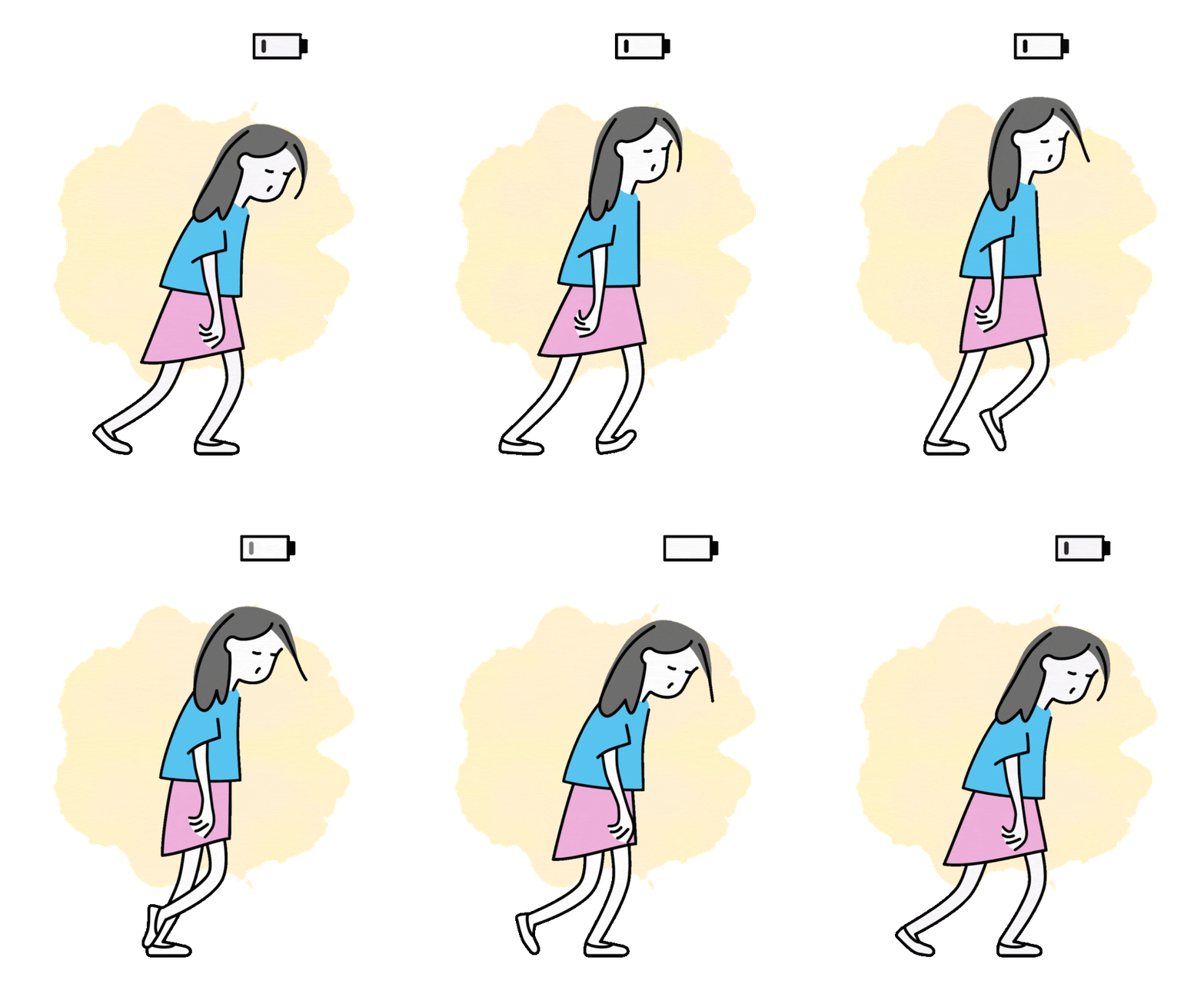
Recent studies paint a confronting picture:
🌀 85% of Gen Z have felt lonely in the past year (compared to 46% of Boomers).
🌀 Less than one-third of Gen Z say their mental health is “good” or “excellent.”
🌀 They are flourishing less than any other age group, on purpose, on hope, on connection.
🌀 Suicide remains the second or third leading cause of death in those under 25.
🌀 And men, especially young ones, are 4X more likely to take their own lives.
These numbers are not background noise. They’re a signal. And they’re asking something of us as leaders and as people.
In workplaces, we often talk about performance, resilience, and results. But rarely do we talk about what it takes to stay afloat. Or what it means to show up for someone else who’s barely managing to.
We keep looking for the next leadership model, the next strategic framework, the next big plan but maybe what’s needed isn’t something new. Maybe it’s something older. Something we’ve lost touch with: the courage to ask the hard questions, the humility to say, “I’m not sure,” and the kind of care that doesn’t come from HR policies, but from being human.
It turns out, resilience isn’t just built individually it’s held collectively. It’s the presence of someone who listens, checks in, notices when you're not quite yourself.
And so maybe instead of asking people about their five-year plan, we should be asking:
What kind of leader do you want to be remembered as? And who have you made feel seen along the way?
Because leadership has never really been about control. It’s always been about connection. And that kind of leadership doesn’t always look impressive. Sometimes, it’s quiet. Sometimes, it’s just a question no one else is asking.
There’s more to say.
A Harvard Business Review study found that 69% of leaders feel uncomfortable showing vulnerability at work. But 92% of employees said they trust their leaders more when they do. That gap between how we lead and how we’re received is where trust is lost. Where culture gets diluted. Where disconnection grows.
According to Gallup’s 2024 State of the Global Workplace report, only 23% of employees worldwide say they’re thriving at work. One of the strongest predictors of disengagement? Feeling invisible, isolated and unheard.
This isn’t a young people problem. It’s a leadership problem. It’s a human problem. And it shows up every time we gloss over the truth, avoid the hard conversation, or walk past someone who clearly isn’t okay and say nothing.
When senior leaders stay silent about burnout, uncertainty, or pressure, others learn to do the same. Slowly, the workplace becomes quieter, more polite, less real.
But it only takes one person to shift the tone.
It can start with a single meeting that opens not with, “What’s the update?” but with, “How are you, really?”
It can start with a board conversation that explores not just what went wrong, but how people were impacted.
It can start with the question you’ve been meaning to ask, but haven’t found the words for.
The future of work isn’t asking for more polish. It’s asking for more presence. And the leaders people remember aren’t the ones who always had the answers they’re the ones who made it safe to speak.
So, what are you still afraid to say out loud? And who needs to hear it?