
Skills Needed in 2030
The rhythm of reinvention. Machines won't end work. They'll rearrange it.
Some numbers slip past without leaving a trace. And then there are the ones that stop you cold. The ones that make you put down your coffee, look up from your day, and ask: what does this mean for all of us?
By 2030, the share of tasks done by humans will shrink by almost 15% points. 82% of that shift will come from automation.
But that’s only part of the picture. The World Economic Forum’s Future of Jobs Report tells us that 44% of workers’ core skills will need to change in just the next five years. McKinsey adds another layer, as many as 375 million workers worldwide may need to switch occupational categories by 2030.
At first glance, all of this feels like loss. Like the ground shifting beneath us. But maybe that’s the wrong lens. The World Economic Forum reminds us: machines won’t end work, they’ll move it. rearrange it, reshape it.
And so the real question isn’t: what disappears?
It’s: who learns to dance with what remains?
The dance will not be uniform. For some, it will mean retraining into entirely new careers; for others, it will be weaving new tools into old crafts. The welder who masters robotics. The nurse who harnesses AI diagnostics. The teacher who uses technology to personalise learning rather than standardise it. Work will keep changing shape, but its essence - contribution, meaning, connection - will remain deeply human.
This moment calls less for certainty and more for courage. Machines may rewrite the choreography, but we decide how to step into it. The future belongs to those willing to learn, unlearn, and relearn - to let curiosity lead where routine once ruled. Because in the end, the real skill we need isn’t technical. It’s the willingness to keep moving, even when the music shifts.
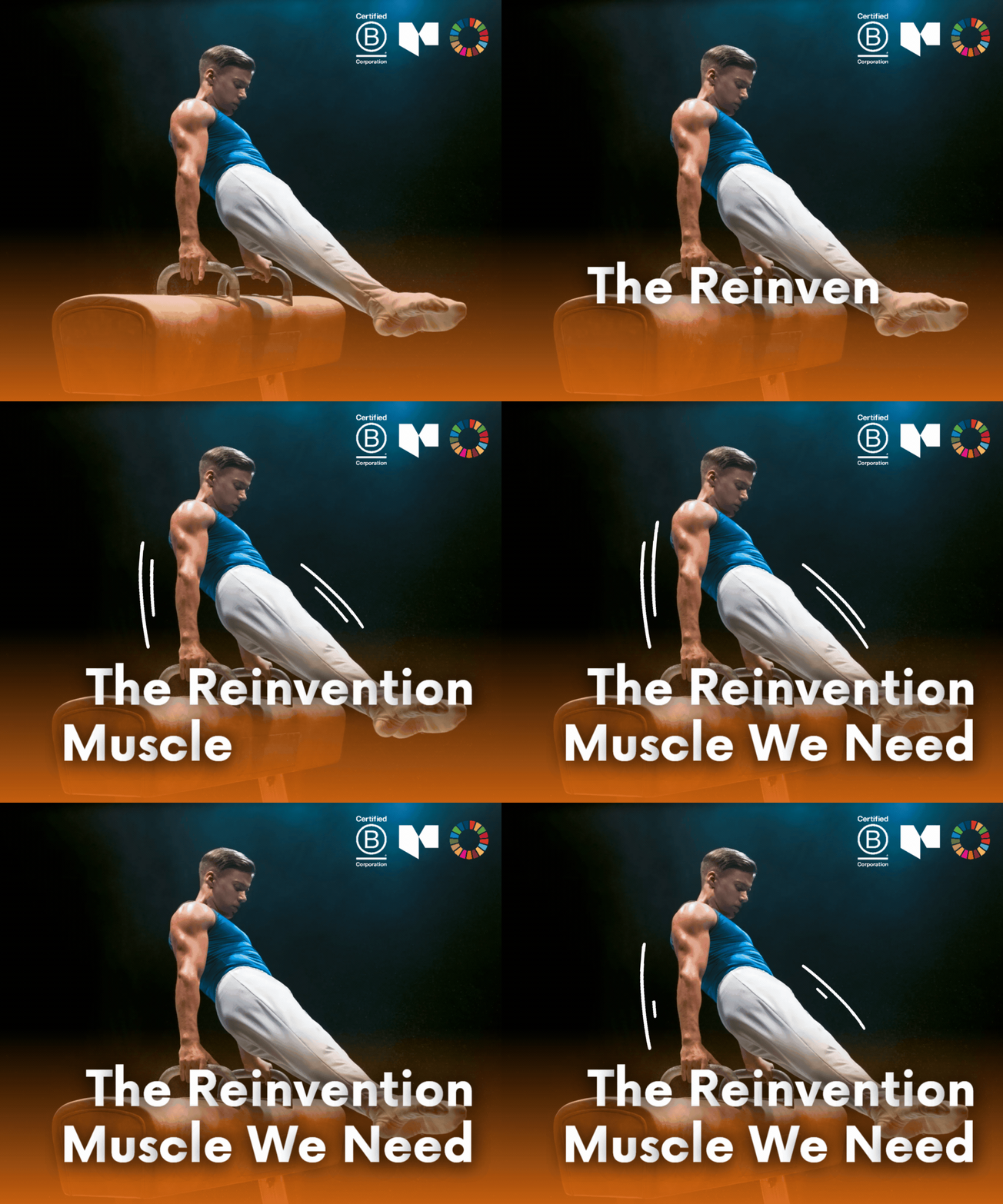
What this really asks for us?
Not just what changes, but how we choose to meet it. Each of us will face this differently, but no one is untouched.
If you’re leading
This isn’t just about saving costs. It’s about amplifying human strengths - empathy, creativity, judgment. Deloitte found companies prioritising “human capabilities” with tech are 2.2x more likely to beat financial targets.
If you’re shaping others’ growth
Coaches, consultants, advisors - AI is tearing through templated work. Your edge now is helping clients hardwire reinvention. McKinsey shows companies that continually reallocate talent are 2.5x more likely to outperform peers.
If you’re navigating your own career
Security won’t be your job title, it will be adaptability. Gartner predicts 58% of workers will need new skills just to do their current jobs by 2027. The ones who reskill and reposition again and again will set the pace.
Reinvention isn’t a one-time act. It’s a rhythm you learn, practice, and repeat. If you’re ready to bring that rhythm into your work or your organisation, we’d love to help.